
The Impact of Augmented Reality on Toy Play
In the evolving landscape of technology, augmented reality (AR) is making a significant splash in the world of toys. This fascinating blend of the digital and physical realms is reshaping how children interact with their playthings, offering an enriched experience that bridges imagination and reality. But what exactly does this mean for the future of play? 🤔
Table of Contents
1. Introduction
3. AR in Toys: A New Dimension of Play
5. Challenges and Considerations
6. Conclusion
7. FAQs
Introduction
Augmented reality is no longer a futuristic fantasy; it’s a present-day reality, especially in the world of toys. From enhancing educational experiences to fostering creativity, AR-infused toys are changing the way children engage with playtime. This blog post delves into the intriguing impact of AR on toy play, exploring the benefits, challenges, and future potential of this innovative technology.
What is Augmented Reality?
Augmented reality is a technology that overlays digital content onto the real world, often through smartphones, tablets, or AR glasses. Unlike virtual reality, which immerses users in a completely virtual environment, AR enhances the real world with interactive, computer-generated elements. This technology has found its way into various domains, and toys are no exception.
AR in Toys: A New Dimension of Play
Imagine a toy dinosaur that not only roars but also appears to walk around your living room, or a puzzle that comes to life with vibrant animations as you piece it together. These are not just figments of imagination but tangible experiences offered by AR toys. By integrating AR, toy manufacturers are creating immersive experiences that captivate children’s attention and inspire a deeper level of interaction.
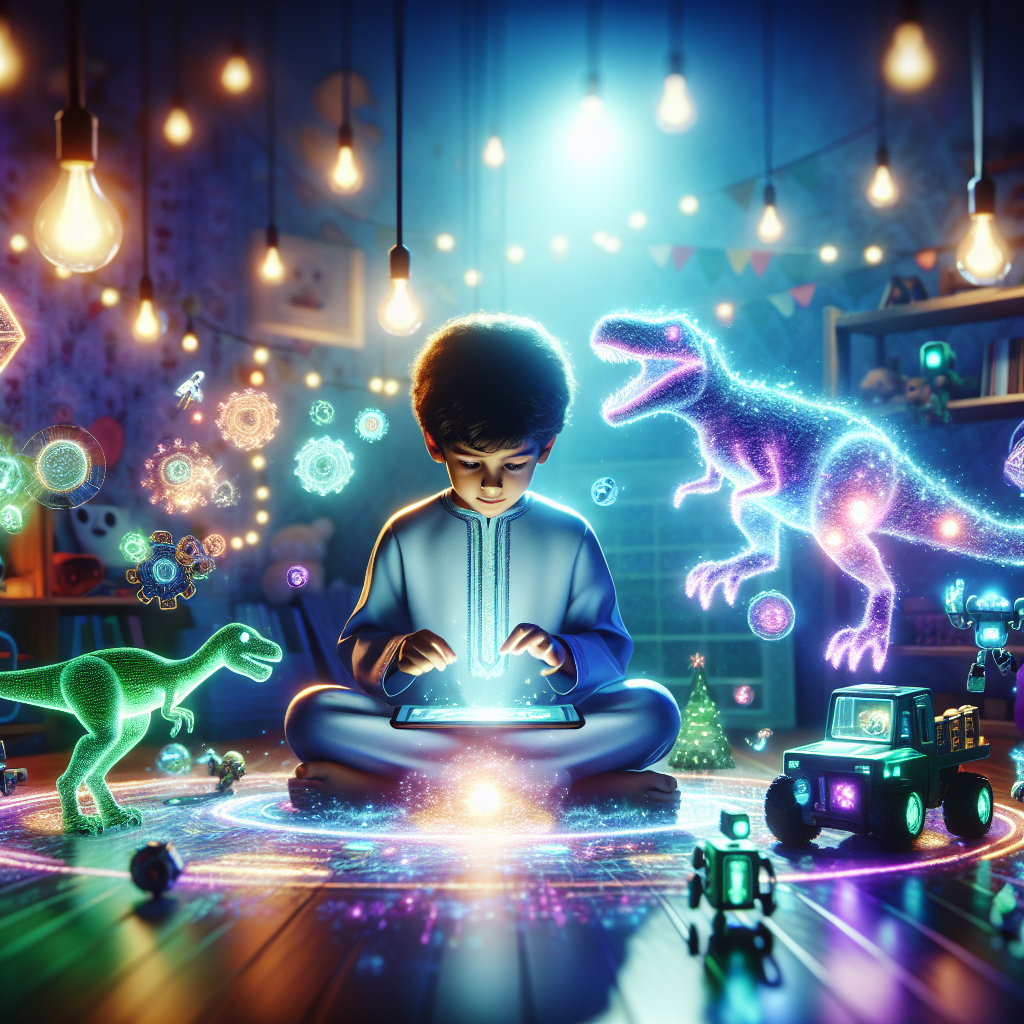
For instance, companies like LEGO have introduced sets that, when scanned with a smartphone app, allow children to engage with their creations in new, exciting ways. This synergistic play encourages kids to explore and learn beyond the traditional boundaries of physical toys.
Benefits of AR Toys
AR toys offer a plethora of benefits that go beyond mere entertainment:
1. Educational Value: Many AR toys are designed with educational purposes in mind. They can teach children about the solar system, anatomy, or historical events through interactive and engaging digital content. 🎓
2. Enhanced Creativity: AR encourages imaginative play by providing children with limitless possibilities. They can create stories and scenarios that blend the physical with the digital, fostering creativity and problem-solving skills. 🎨
3. Improved Engagement: The interactive nature of AR keeps children engaged longer than traditional toys, as they are continuously discovering new features and possibilities. 📈
4. Social Interaction: Many AR toys come with multiplayer options, allowing children to play together, whether in the same room or across the globe, enhancing social skills and collaboration. 🤝
Challenges and Considerations
Despite their benefits, AR toys are not without challenges. One concern is the potential over-reliance on digital play, which might reduce physical activity and traditional social interactions. Additionally, the cost of AR toys can be prohibitive for some families, potentially widening the gap in play experiences due to socioeconomic factors.
Privacy and security are also key concerns, as many AR toys require internet connectivity and data collection to function effectively. Ensuring that these toys are safe and secure for children is paramount.
Conclusion
Augmented reality is transforming the landscape of toy play, offering innovative ways for children to learn, create, and interact. While challenges remain, the potential for AR to enhance playtime is undeniable. As technology continues to evolve, it will be exciting to see how AR toys develop and how they will shape the future of play for generations to come. 🌟
FAQs
Q1: What age group are AR toys suitable for?
A: AR toys are generally designed for children aged 3 and up. However, the complexity of the toy and the required device compatibility should be considered to ensure it fits the child’s age and capabilities.
Q2: Do AR toys require internet access?
A: While some AR toys require internet access for updates or multiplayer features, many function offline once the necessary applications are downloaded.
Q3: Are AR toys safe for children?
A: Most AR toys are designed with safety in mind. However, it’s important for parents to supervise play, ensure device settings are secure, and be aware of any potential screen time concerns.
By understanding and embracing the capabilities of AR in toys, we open the door to a world where playtime is more than just fun—it’s a gateway to learning and exploration. 🚀
